
Design
Vector Files, what are they?
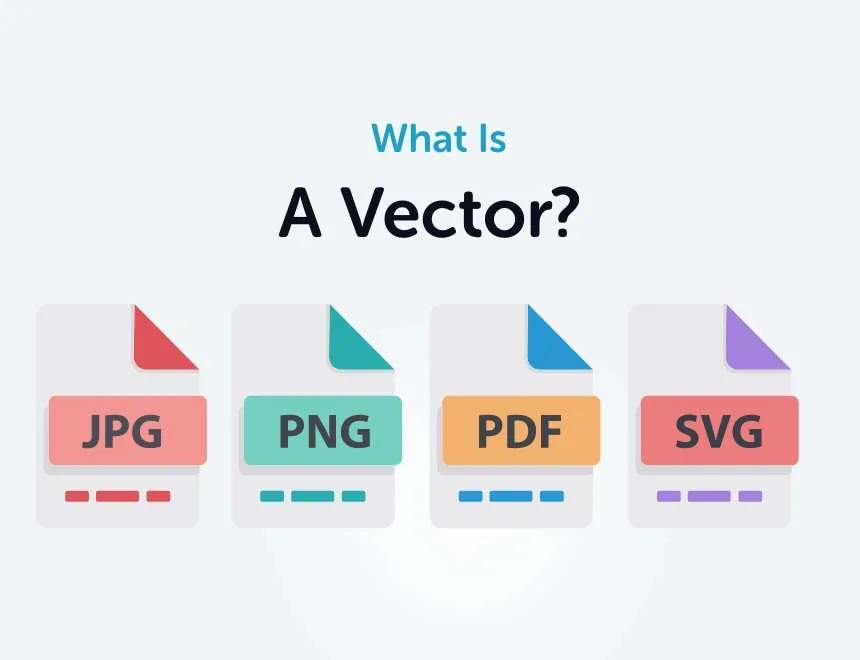
When you’re working on graphic design projects, you’ll often hear the term “vector file” come up. These files are essential for making sure your designs look sharp and professional, whether it’s a logo, illustration, or any kind of visual that needs to be resized. In this post, we’ll break down some of the most common questions about vector files and explain why they’re so important, what programs you need to work with them, and the pros and cons to keep in mind.
What is a vector file?
A vector file is a type of image file made up of mathematical paths instead of pixels. Unlike JPEGs or PNGs, which are composed of tiny squares of color (pixels), vector files are created using points, lines, and shapes. This means they can be resized infinitely without losing any quality, which is why they’re a go-to for things like logos and illustrations.
Why are vector files important for design?
Vector files are crucial in graphic design because they give you the flexibility to resize an image without it becoming pixelated or blurry. If you’re creating something that needs to be printed at multiple sizes—like a logo for a business card and a billboard—vector files make sure it looks perfect no matter the scale.
What are common vector file formats?
There are a few different file formats for vectors, and each serves a slightly different purpose. Here are the most common ones:
- AI (Adobe Illustrator): This is the standard format used in Adobe Illustrator, one of the most popular tools for vector design.
- EPS (Encapsulated PostScript): A versatile format that works well across many design programs, often used in print.
- SVG (Scalable Vector Graphics): Perfect for the web, SVGs are great for responsive logos and icons.
- PDF (Portable Document Format): While we usually think of PDFs as documents, they can also contain vector images, which makes them handy for sharing designs.
How are vector files different from raster files?
Raster images, like JPEGs and PNGs, are made up of pixels, so they have a fixed resolution. This means if you try to make them bigger, they can become pixelated and lose clarity. Vector files, on the other hand, are resolution-independent, meaning they can be resized without any loss of quality. That’s why vectors are ideal for things like large-scale prints or detailed logos.
Why Use Vector Files for Logos?
Logos are a key part of any brand’s identity, and using vector files for them is crucial for several reasons:
- Scalability: Logos need to be used in various sizes, from tiny icons on a website to large signs or billboards. Vector files ensure your logo looks sharp and clear at any size.
- Versatility: Vector files are easy to adjust, allowing you to make changes or tweak your logo design without compromising quality.
- Consistency: A vector logo maintains its appearance across different mediums and formats, ensuring that your brand’s image remains consistent whether it’s on a business card, merchandise, or a digital ad.
- High Quality: For professional printing, vector files provide the best quality. They ensure that your logo is crisp and clean, with no pixelation or distortion.
Final Thoughts
If you are sending a logo to a printer, ordering a sign, or handing files to a developer, ask for vectors. A PNG from social media is not a brand file.
Work with us
Need a logo or brand files that actually scale?
This post explains vector vs raster, common formats, and why printers ask for outlined files.
If you want help with logo design or graphic design, contact Leanne Digital. We deliver the vector files your printer and website both need.
Frequently Asked Questions
Why are vector files important for design?
They stay sharp at any size. That matters for logos, signs, embroidery, and print, where a JPEG will pixelate.
What are common vector file formats?
SVG for the web, AI for Adobe Illustrator, EPS as a common exchange format, and PDF when the artwork is saved as vectors rather than a flattened image.
How are vector files different from raster files?
Raster files (JPG, PNG, GIF) are a grid of pixels. Stretch them and they get blurry. Vectors are math-based paths, so they redraw cleanly at any size.
Can I convert a raster image into a vector?
You can trace it, but the quality depends on the original. A low-resolution logo screenshot rarely becomes a perfect vector. It is better to redraw it properly.
Do I need special software to open vector files?
Illustrator, Affinity Designer, or similar tools open AI and EPS files. SVG can open in a browser. Your designer should also send PDF or PNG previews for everyday use.
Why do printers prefer vector files?
They print at the actual size of the job without losing quality. Outlined text means they do not need your fonts installed.
What is outlined text in a vector file?
The letters are converted from a live font into shapes. That locks the look for print, but you will need the original file if you want to edit the words later.
Can vector files be used on the web?
Yes. SVG is the usual web format for logos and simple illustrations. Photos still belong as optimized raster images.